Getting your first tattoo is a big and exciting choice. It means you are putting important art on your body forever. But the whole process, from the first plan to the final healing, can feel confused or worried about you.
1. The Start: Picking Your Artist and First Talk
The longevity of the tattoo you choose to make will depend on the artist you select. The very first thing to do is not only research but also to have a clear conversation with the artist you want to work with.
Then, book an appointment for a consultation. When going for your first tattoo consultation in Melbourne, carry along pictures, ideas, and a specific location for your tattoo. The artist will assess how complicated the design is and whether it looks good in that place. This first talk makes sure the design is strong and perfect for your body.
Planning the Art and Price
2. Smart Steps: Getting Ready Before Your Tattoo Day
When you arrive at our Melbourne studio, you will find a safe and comfortable space run by experts.
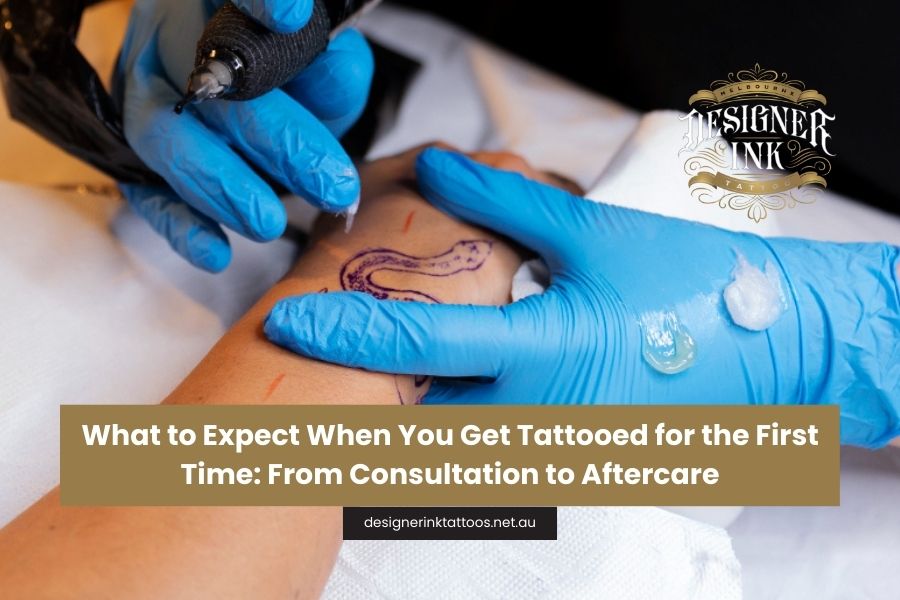
You will first sign a form, checking your age and basic health details. Then, the artist will clean and gently shave the area. The most important moment comes when the artist puts the stencil (a temporary sticker outline of your design) on your skin. You must take a stand, walk around a bit, and see the sticker in a mirror.
You must be 100% comfortable with the position of the stencil. This is the last chance for you to request a move or alteration before the permanent process starts. After this, the artist will get their work area ready. You should witness them opening new and sealed packs of needles, tubes, and ink caps. By using only new and clean tools, you are assured of being protected from germs.
Tattooing feeling is often compared to continuous, deep scratch or very strong vibration. Pain is perceived differently by everyone, but its intensity can still be reduced. Most of the pain relief tips are concentrated on your breathing. Do slow, deep, regular breaths in order to keep your body relaxed and at the same time, your mind will be distracted.
Try not to tense up your muscles. Assisting you will be their main concern since they are prepared to do so, and this will also enable you to take short breaks to rest, do stretching exercises, or have a snack. You can also be engaged in talking or listening to music with headphones as a good way to take your mind off the situation.
Healing is the most critical stage! Proper aftercare allows your ink to remain clear and vibrant for eternity.
The First Wash and Lotion Routine
Your artist will put a medical covering on the tattoo. Obey the doctor’s orders with regard to when it can be removed. After it is taken away, cleanse the tattoo area carefully with warm water and unscented mild antibacterial soap. Use just your clean fingers to remove the excess fluid or ink.
To dry the tattoo, gently pat it completely dry with a clean paper towel—never use a shared cloth towel. Then, put on a very thin layer of the lotion the artist told you to use. This is crucial for tattoo aftercare instructions for first time clients: use very little lotion! The skin needs air to heal well.
You tattoo will begin to flake after about a week as if you have a bad sunburn. This is absolutely normal since the uppermost layer of skin is falling off. It is imperative not to pick, scratch, or peel the skin! Picking draws the ink out with it, and that makes one’s tattoo appear splotchy, and the skin beneath it gets scarred. If it gets very itchy, lightly slap the area or put a tiny bit more lotion on it.
Tattoo soaking is a no-no for the first three to four weeks. No long baths, swimming pools, lakes, or hot tubs for you. Soaking in water opens the doors to germs and, at the same time, inks the tattoo out. Also, during the entire healing period, keep the tattoo fully covered and out of the sun with direct light.
The top layer of your skin usually heals in about a month, but the deeper layers take longer. If you see swelling that does not go down, or thick, yellow liquid, see a doctor right away.
For long-term care, always use a strong sunscreen (SPF 30 or higher) on your tattoo when you are outside. The sun is the number one thing that makes tattoos fade fast over time.
If your tattoo needs a small fix after it is healed (a ‘touch-up’), talk to your artist. Many studios offer one free touch-up within the first year. You now have a beautiful, permanent piece of art.