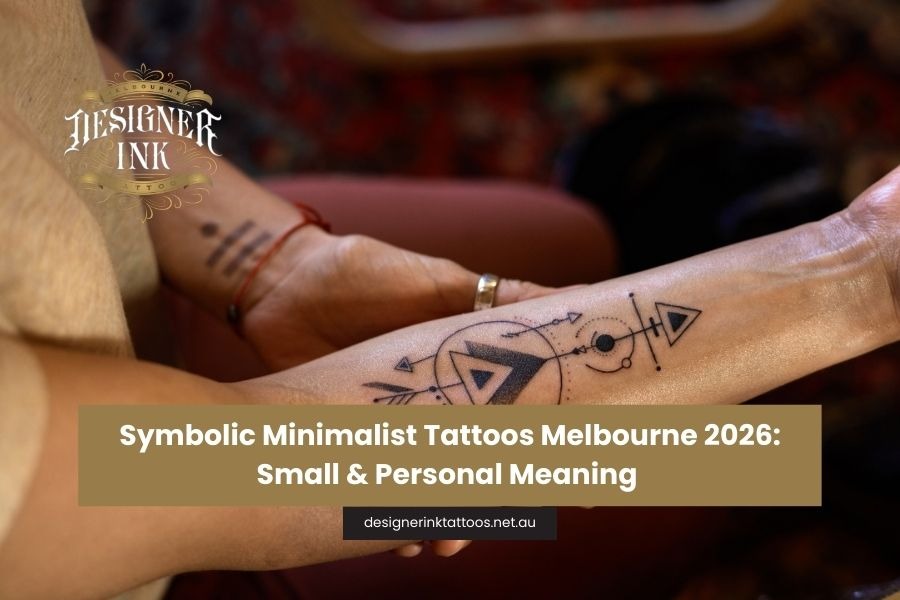

Why Minimalism Is Dominating Tattoo Culture Right Now
The Symbols People Are Choosing And What They Mean
Celestial & Cosmic Symbols: Moons, stars, planets, and constellations remain perennially requested but the motivation in 2026 goes deeper than aesthetic. Many clients choose these to mark transitions: a phase they survived, a year that changed them, a relationship that shaped who they became. A crescent moon on the collarbone. Three stars along the forearm. A single planet on the inner wrist. Small enough to be overlooked by most, visible every day to the person wearing it.
Botanical & Nature-Inspired: Botanical fine line tattoos remain one of the most requested styles in 2026, delicate florals, leaves, herbs, and vines drawn with ultra-thin linework that highlights natural shapes without heavy shading. Popular choices include wildflowers, olive branches, and single-stem designs placed along the forearm, collarbone, or rib area. The appeal is partly aesthetic and partly symbolic; plants that hold personal meaning to the individual, flowers that represent someone lost, herbs tied to cultural heritage.
Numbers, Coordinates & Dates: Angel number tattoos have surged in popularity- tiny repeating numbers believed to hold symbolic power, often tied to personal milestones like birthdays, anniversaries, or life-changing events, favoured for their discreet placement on fingers, wrists, behind the ear, or along the ribs. Geographic coordinates, birthdates, and anniversary numbers fall into the same category; meaningful to exactly one person, invisible to everyone else.
Placement: Where Small Tattoos Carry the Most Meaning
Placement | Character | Best Suited For |
Inner wrist | Visible to you daily, easy to glance at | Affirmations, dates, coordinates, small symbols |
Behind the ear | Discreet, intimate, personal | Tiny celestial icons, small initials, minimal florals |
Collarbone | Elegant, visible in certain necklines | Short words, single stems, small geometric shapes |
Inner forearm | Readable, always present | Script, line art, botanical pieces |
Ribcage | Private, deeply personal | Longer scripts, larger minimal pieces, portraits |
Ankle/foot | Casual, easily hidden | Small symbols, dates, initials |
Finger | Bold in its smallness | Single characters, tiny symbols (which requires touch-ups) |
The First-Timer's Guide to Getting a Symbolic Tattoo
- Start with meaning, not design. The best minimalist tattoos come from knowing why before what. What do you want to remember? What do you want to mark? What shape or symbol already lives in your mind when you think about this? Give that to the artist and let the design follow.
- Research artist styles, not just studio names. Fine line and minimalist work require a genuinely different technique to bold or traditional tattooing. Look at healed examples of an artist’s fine line work specifically- not just fresh photos, which always look sharper than the long-term result. Artists who specialise in this style have practiced the needle control and pressure management it requires.
- Talk about placement during the consultation, not after. Experienced artists know that placement affects both how a design looks and how it ages. A design drawn for one location may not translate well to another. Get this conversation happening early.
- Understand that small doesn’t mean simple to execute. A lot of artists get tricked into thinking fine line designs will be easy because they are small. They’re actually a great way for practiced artists to show their skills when it comes to clean, intricate details- demanding precision and an extremely steady hand.
- Ask about aftercare from the very start. Fine line tattoos require careful healing. Less ink saturation means the lines are more vulnerable to sun damage and improper care in the first weeks. Proper aftercare isn’t an afterthought- it determines how well the tattoo holds over years.
What Separates a Good Fine Line Tattoo from a Great One
- Healed work, not just fresh. Fresh tattoos always look crisper than they will after six months. Ask to see healed examples.
- Consistent line weight. Wobbles or inconsistency in line pressure become more visible as the tattoo ages.
- Thoughtful placement on the body. The best artists consider how a design sits with anatomy, not just how it looks flat on skin.
- Restraint. A great minimalist artist knows what to leave out. Over-designed small tattoos lose their quiet power quickly.
Designer Ink: Where Symbolic Minimalist Work Is Done with Care
- Artists who specialise, not generalise. The studio’s fine line artists- including Laura, whose work has stopped strangers in the street- have built their practice specifically around delicate, precise, and personal work. You’re not being handed to a generalist who covers every style.
- Custom design every time. Designer Ink doesn’t copy. Every tattoo is drawn specifically for the person commissioning it- your story, your body, your placement. There are no flash sheets of generic symbols. There’s a conversation, a sketch, and a design that exists for you alone.
- A studio built for comfort, especially first-timers. The space is clean, calm, and welcoming in a way that matters enormously when someone is nervous. First-timers are walked through the full process before anything begins like placement, sizing, what to expect during healing, all of it.
- Female artists available. For clients who feel more comfortable with a female artist, Designer Ink has highly sought-after female tattoo artists whose fine line work is particularly in demand.